If you have received this post as a email alert please click here to view in original format as WordPress has a glitch they tell me they are still working on!

Update
Chandigarh – 6th September 2023
Namaste (Hello) from Chandigarh, India. After more than a month’s break from travelling I’ve had time catch up with blog writing and film editing from the past 5 months. This post covers Turkey and Georgia while the next one which is likely to be posted before I head for Pakistan on the 12th September will cover Central Asia to Chandigarh. Hopefully this will give you a glimpse of what the bejesus I’ve been up to.
Roman 24,000-seater
Selҫuk, Turkey – 31st March to 1st April
After March in Izmir, it was time to hit the road, this time with Tim & MF who had joined me for 3 days in Izmir. Gürcan our amazing Airbnb host kindly drove us to the metro to connect with the train to Selҫuk.

A 5 minutes bicycle ride west of Selҫuk is the Temple of Artemis which is / was? one of the seven wonders of the Ancient World. To be honest, I not only hadn’t heard of the Temple of Artemis but once there was disappointed with what remains … but I guess not as disappointed as the Greeks were just after the Goths burnt it down in 268AD.
Not to be one to let the Goths spoil everyone’s view of the temple, I with the help of sketchfab have provided an overlay to the photo I took to give us an idea of the scale and form of the Temple …. modern technology eh!


Tim, MF & I peddled another 15 minutes down the road and arrived at the town of Ephesus. which was established by the Greeks in the 10th Century BC. The city survived invasion by the Goths, Cimmerians, Romans and Ottomans until it was finally abandoned in the 15th Century. The remains have been under archaeological investigation for the past century with excavations revealing only 10% of the gridded city so far. Enough to fire the imagination!


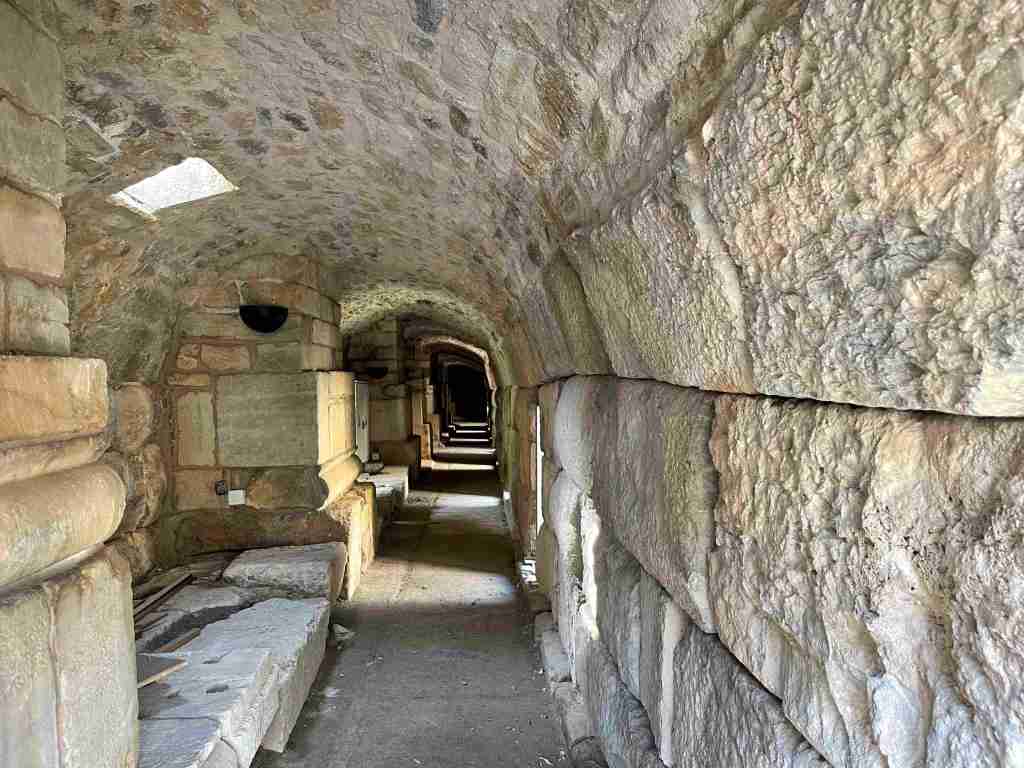


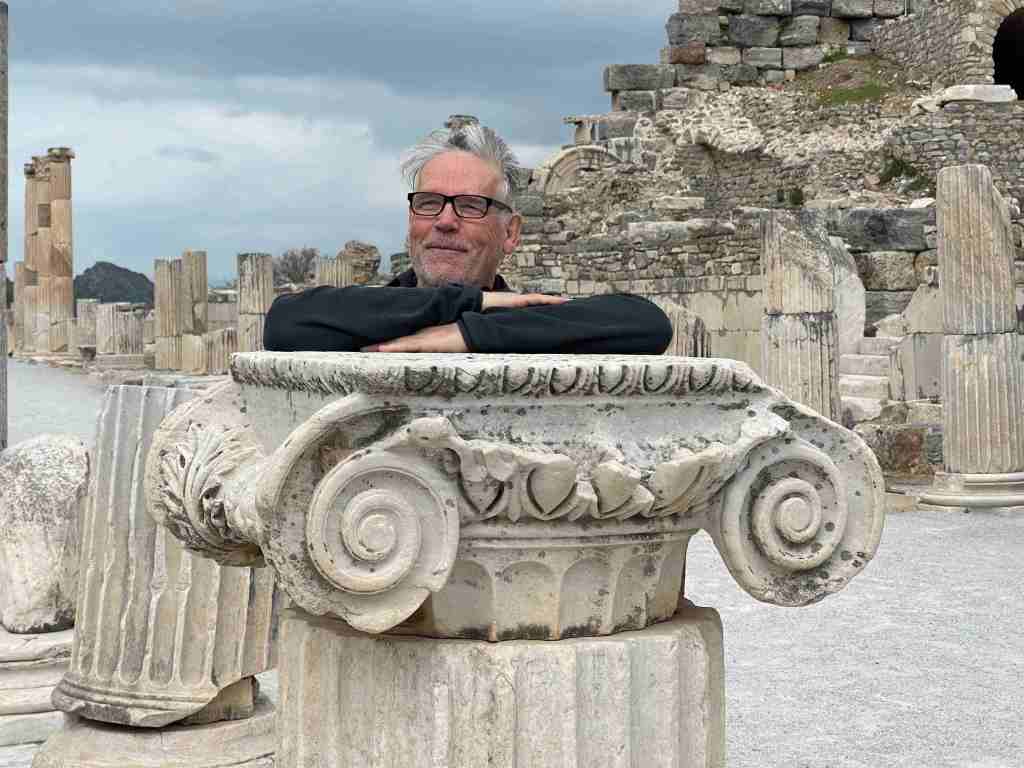

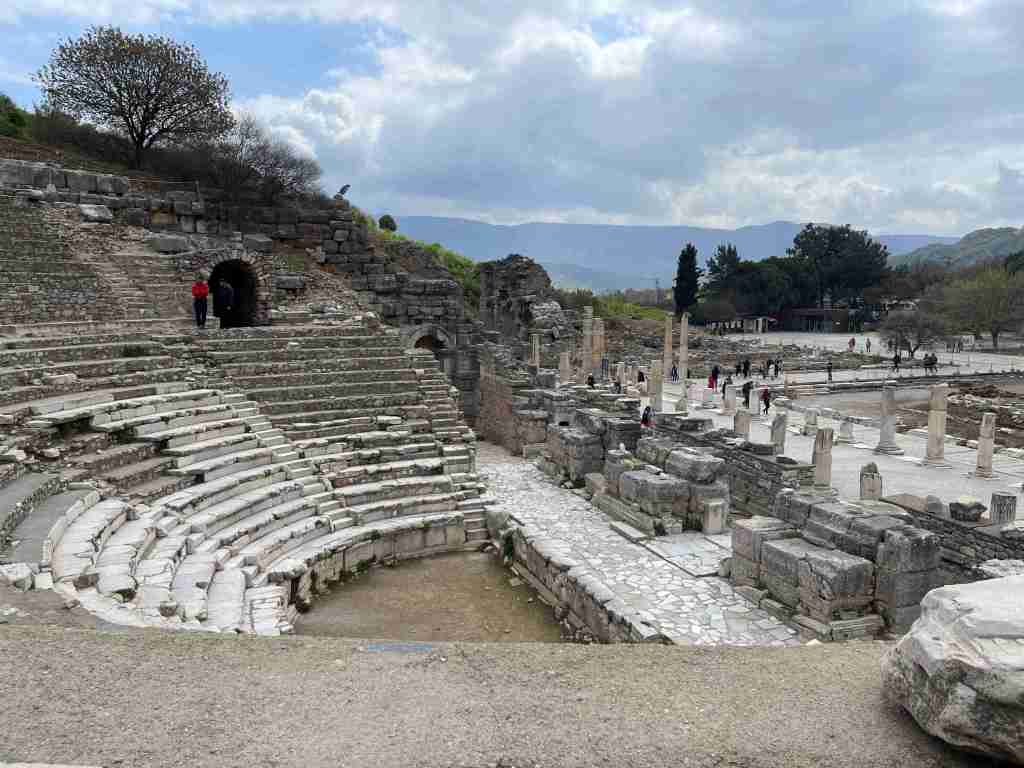

1/12 Selҫuk roof skylight detail, 2/12 The major port of Ephesus was originally at the end of this colonnade – now 5km away after silting up. 3/12 Ionic column capital. 4/12 Theatre back stage walkways. 5/12 stage left. 6/12 The Greeks constructed the original theatre in about 250BC. The Romans enlarged it to a 24,000-seater in the 2nd Century. 7/12 gridlock, 8/12 Library of Celsus. 9/12 Pausing on an ionic capital. 10/12 Traditional custodian. 11/12 Odeon 2nd century 1500-seater. 12/12 Main street.
Roman 15,000-seater
Pamukkale – 2nd to 3rd April
Pamukkale is the sight of the ancient Greek city of Hierapolis which dates to the 7th Century BC. The city was strategically located next to mineral-rich thermal waters which flow down white travertine terraces on a nearby hillside.
The Roman theatre built by Hadrian in the 6th Century is particularly well preserved and overlooks the thermal springs and a snow-capped mountain backdrop. While at the theatre of Hierapolis an informal choir appeared, sang two songs and then disappeared.
Atatürk
Ankara – 4th to 5th April
In the early 20th Century, the once mighty Ottoman Empire had declined and through that void emerged Mustafa Kemal Atatürk, who is regarded as one of the most important political leaders of the 20th century. Having proven himself as a successful military leader he transitioned from commander and Chief of the military forces to the President of the newly established Republic of Turkey in 1923 and remained president until his death in 1938. His sweeping reforms included legislating secularism, freeing education from dogma and making it equally available to both sexes, introducing dress reforms including the Hat Law of 1925 which banned the wearing of the fez, changing the nations written script from Arabic to modified Latin to make literacy more achievable and sexual equality in such matters as inheritance and divorce to name just a few.
A visit to Anıtkabir, the mausoleum of Atatürk in Ankara not only gave a better understanding of Atatürk legacy but laid bare the devotion the Turkish people still have for him. Hopefully the video below (A to B Part 3) goes some way to show the depth of this loyalty. I happened to be at Anıtkabir during a university graduation ceremony where graduates with military escort pay respect to the man who shaped their Republic.

Las Vegas of the Black Sea
Batumi, Georgia – 9th to 10th April
Batumi, Georgia on the shores of the Black Sea was a shock. Primary income is tourism and gambling with some revenue coming from shipping Central Asia’s land locked oil … a rapidly expanding brash town.
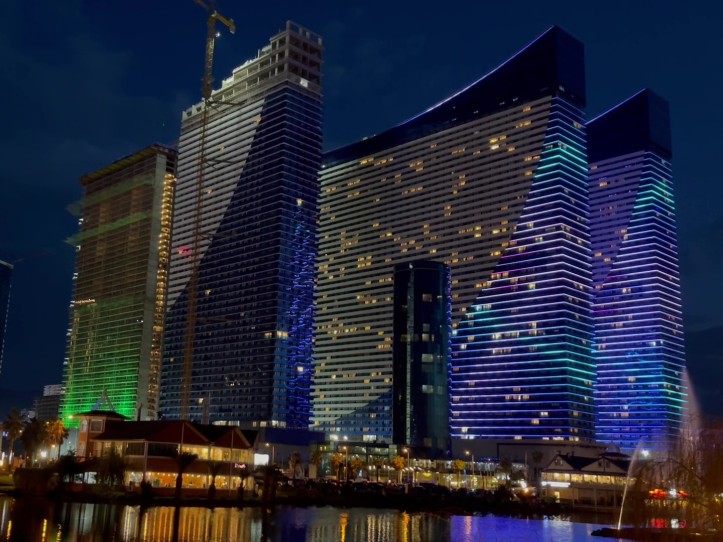


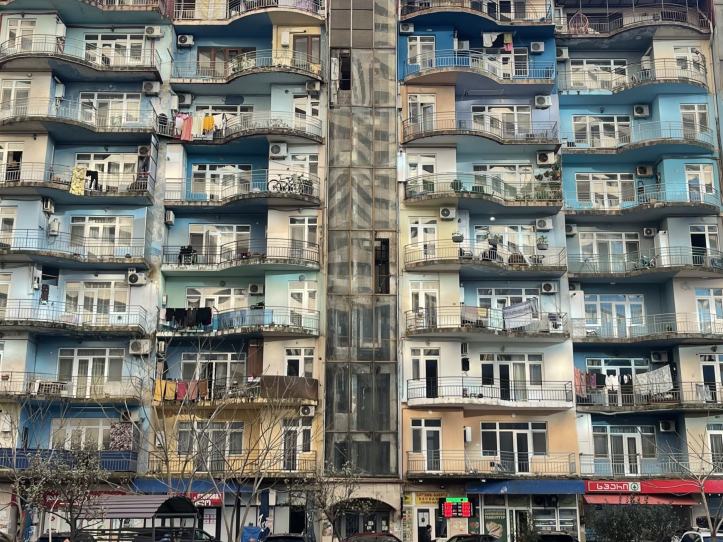
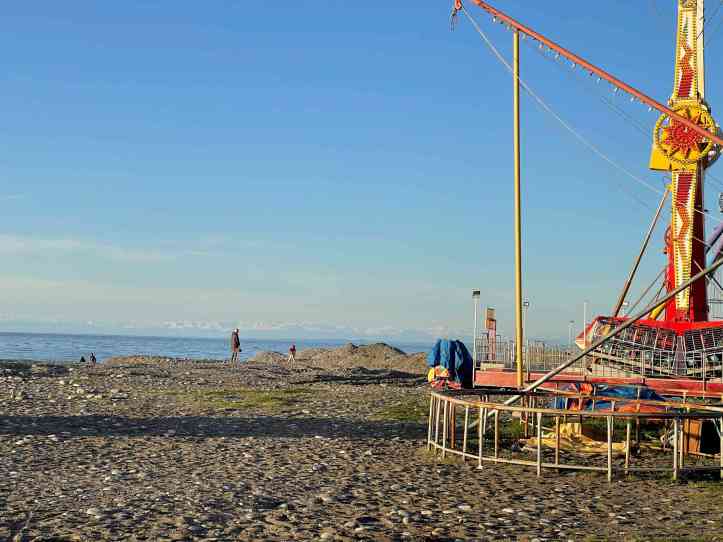
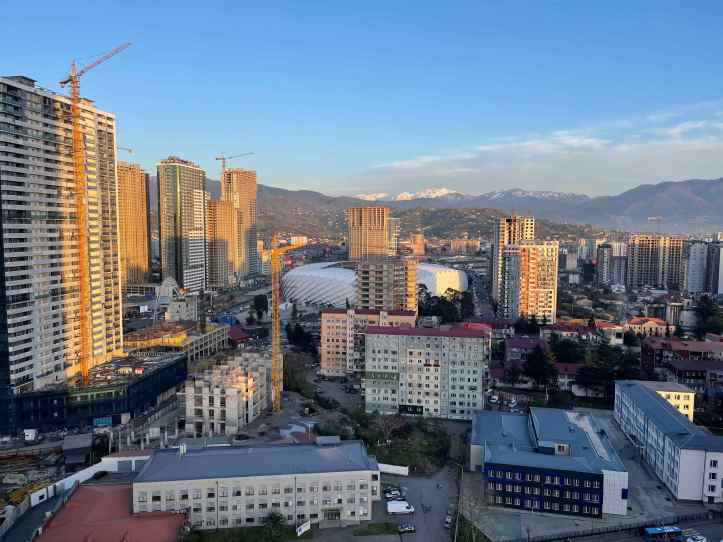

1/9 Animated lighting displays were timed to classical music blaring through the streets. My studio was located on the RHS building on the 22nd floor. 2/9 Building texture. 3/9 View from hotel room. 4/9 Mountain view from hotel room. 5/9 Sea view from hotel room. 6/9 Old building texture. 7/9 On the Beach. 8/9 Mountain view. 9/9 Building texture.
Freedom Day & Brutalism
Tbilisi – 11th April to 14th June (with a trip to Amsterdam in between)
May 26th Independence Day was celebrated in Tbilisi with political speeches, flag hoisting, fireworks, music concerts, and a plane flyover. Initially I thought celebration was for when the Soviet Union collapsed, and Georgia gained independence in the early 90’s. But further digging revealed Georgia’s history in the 20th century is far more complex than that.
The celebration actually honours the 26th of May 1918 when The Democratic Republic of Georgia was established in the aftermath of the Russian Revolution of 1917. This republic was short lived as Georgia was invaded by the Soviet Russian army in 1921 and was incorporated into the newly formed Soviet Socialist Republics (USSR).
Forwarding 70 years later, in April 1991 the Soviet Union collapsed and Georgia regained independence … end of story NO! Just prior to this on April 9, 1989, Soviet troops were used to break up a peaceful demonstration at the government building in Tbilisi. Twenty Georgians were killed, and hundreds wounded and poisoned. The event radicalised Georgian politics, leading many to conclude that independence was preferable to continued Soviet rule. A memorial in front of Georgia’s parliament commemorates the ‘April 9 Tragedy’ – see slide 4/7 below.
In November 2003 a nonviolent change of power occurred in Georgia known as the ‘Rose Revolution’. Widespread protests developed following the disputed elections of President Eduard Shevardnadze. Red roses were carried by protestors and after 20 days of protest the President resigned, which marked the end of the Soviet era leadership in the country – see slide 5/7 below.
The ‘Russo-Georgian War’ between the 7th–12th August 2008 saw the self-proclaimed republics of South Ossetia and Abkhazia, then 20% of Georgia, returned to Russian control.
On 23 June 2022, the European Union indicated it was ready to accept Georgia as a member once they had completed economic reforms including more investment in education, renewable energy generation, and transportation.
Since the Russia’s invasion of Ukraine in 2022, about 1.5 million Russian citizens have crossed the Russia-Georgia border.


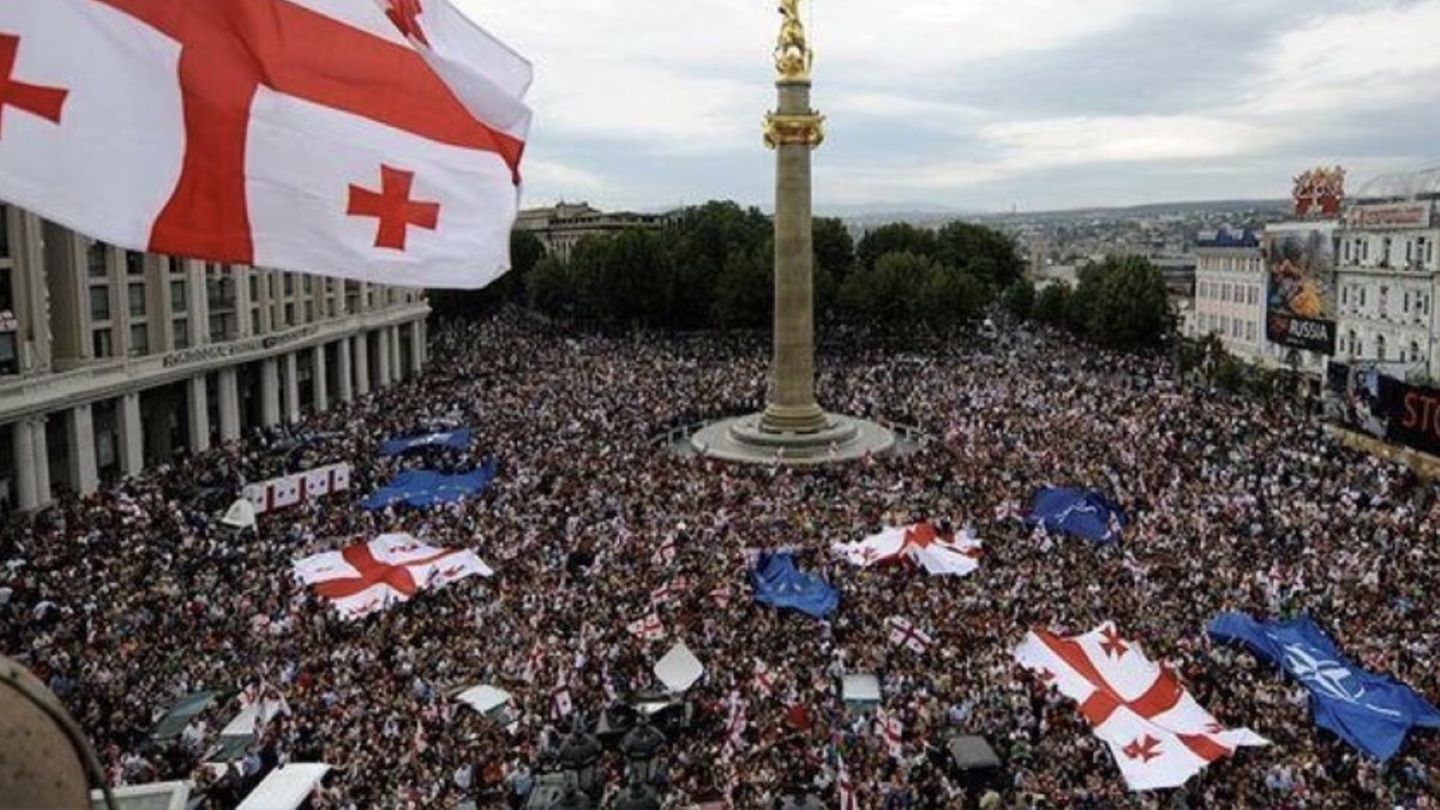


1/7 Independence Day flyover. 2/7 Georgian Parliament Building. 3/7 Celebration streamers line the entire length of Shota Rustaveli Avenue. 4/7 April 9 tragedy memorial. 5/7 Rose Revolution protests in Tbilisi, 2003. 6-7/7 & Political expression about Russia and Ukraine are a common sight on the streets of Tbilisi.
Below is a glimpse of some of the brutalism Tbilisi’s has to offer.


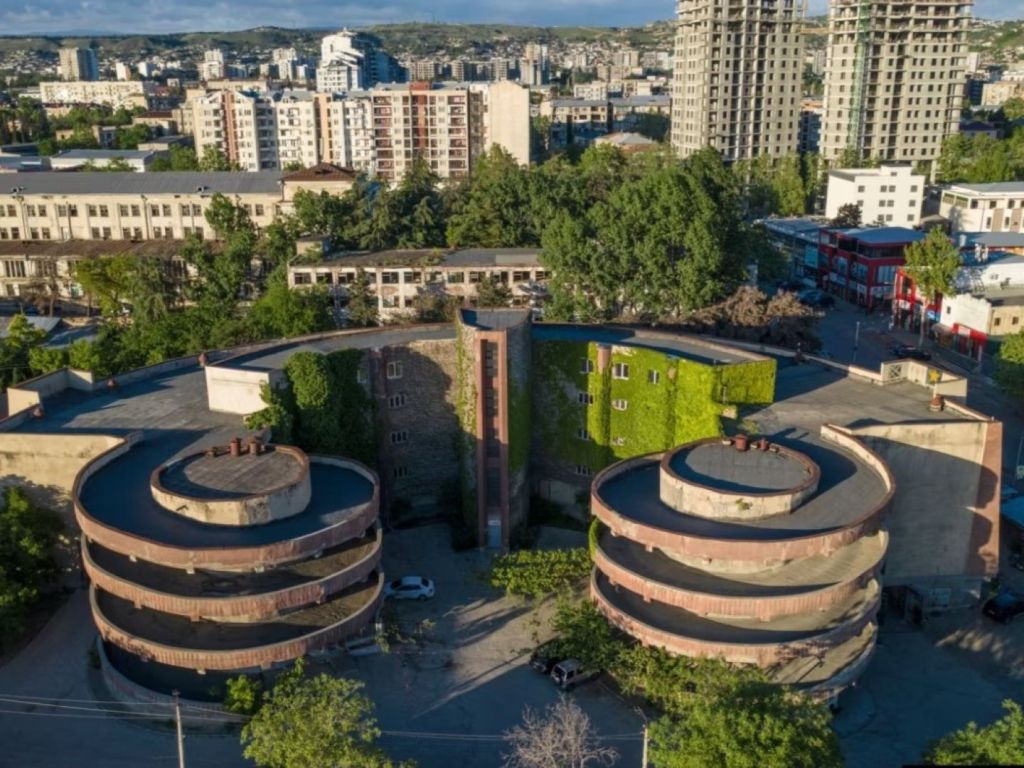


1/8 Chronicles of Georgia, sculptor: Zurab Tsereteli,1985 (incomplete). 2/8 The Bank of Georgia headquarters, architects: George Chakhava and Zurab Jalaghania,1975. 3/8 Ghrmaghele Metro Station. 4/8 Tbilisi’s former archaeology museum, architects: S Kavlashvili and S Bostanashvili, 1988. 5/8 Sculpture by Gogi Ochiauri, Love for the Tbilisi, 1964. 6/8 Former Auto Garage, architect: Djemal Lebanidze,1982. 7/8 Nutsubidze Plato 1 Apartments, architect: Otar Kalandarishvili and Guizo Potskhishvili, 1976. 8/8 National Scientific Library, architect: G. Bichiashvili, 1985.
Family catch up
Amsterdam – 3rd to 11th June
Just before leaving Tbilisi, I flew to Amsterdam and caught up with Ellen and Callum. Ellen having just completed a two-week tour of 5 countries visiting Architects and significant buildings as part of the Dulux Study Tour. Callum who is working in the Falkirk Hospital in Scotland had a short flight over to join us. It was great to all be together again, do a bit of bike riding and catch up with the Dutch cousins.


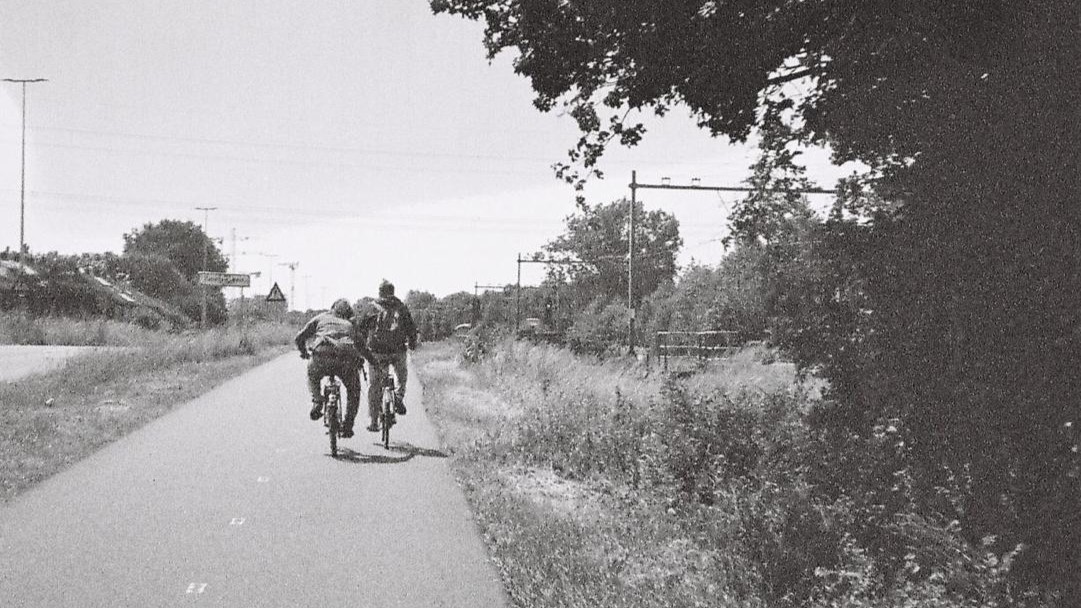


A captivating piece of public art at Amsterdam’s Schiphol airport below.
A to B – Part 3
The following clip is Part 3 of the trip from Falkirk to Cairns.
Next post
The next post which is nearly done includes lots of useful information such as a cooking recipe for 500kg of Biryani and how to buy train tickets in Aktau … but also contains disturbing news about ‘Silver’ becoming a resident of Uzbekistan!
Cheers for now 87)
 Sphere Observations
Thanks Mark. Really enjoyed all that and looking forward to the next instalment
LikeLike
Just wonderful. Didn’t watch the entire 38 minutes of video (I have work to do). Super keen to see the next instalment and learn what to do with 500kg of biryani. xx
LikeLike
Hi Ellen, The biryani recipe will be perfect for entertaining, Currently working on a FNQ translation as it is in Hindi! 😦
LikeLike
Hi Mark, loving your travels and seeing Callum and Ellen, having some trouble replying but still watching your adventures. I was so impressed with Attaturk i bought a tie for my little nephew.
Stay safe , enjoy your travels.xx Sandy
>
LikeLike
Sandy, lovely to hear from you. Yea Ataturk was pretty fantastic … although not sure Winston Churchill thought the same at Gallipoli!
LikeLike