If you have received this post as an email alert, please click here to view in original format as WordPress has a glitch they tell me they are still working on!
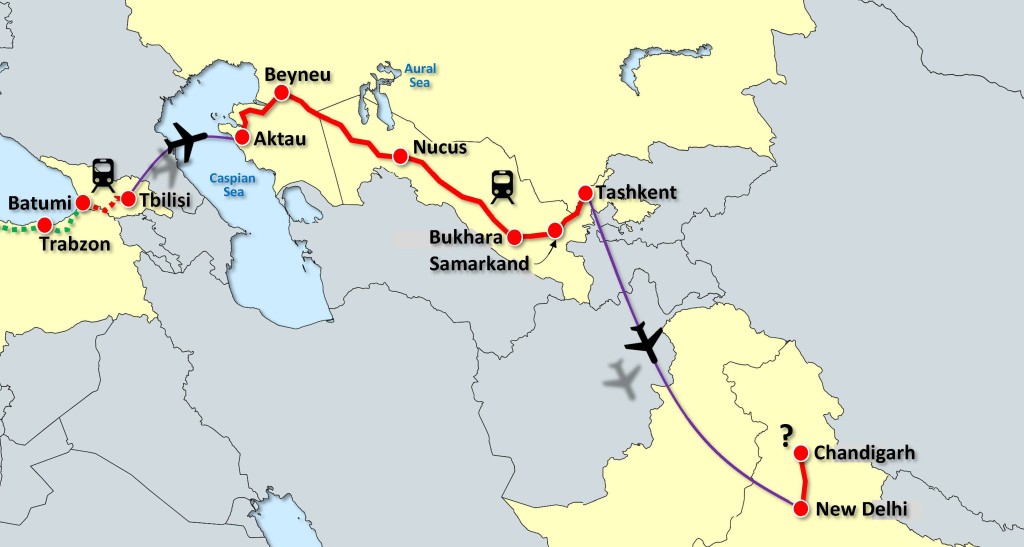
Update
Chandigarh – 11th September 2023
Namaste (Hello) from Chandigarh, India. The plan tomorrow morning is to catch the train to Amritsar, followed by a bus to the Pakistan border, walk across the border and then catch the bus to Lahore … what could go wrong!
So, it’s time to press the button on this blog so you can learn how to make a 1,000kg Biryani for your next party, purchase train tickets in Aktau and find out what happened to Silver?
Local hero’s & sourcing train tickets
Aktau, Kazakhstan – 15th to 24th June
As I was on my way to the travel agent to book trains tickets, I couldn’t help but notice a number of striking murals painted on the ends of the soviet era housing blocks. The first three on housing blocks 27, 28 & 29 adjacent the war memorial are tributes to female heroes who died in the Great Patriotic War (WW2) and were painted to commemorate the 30th anniversary of Kazakhstan’s Independence which occurred in December 1991.


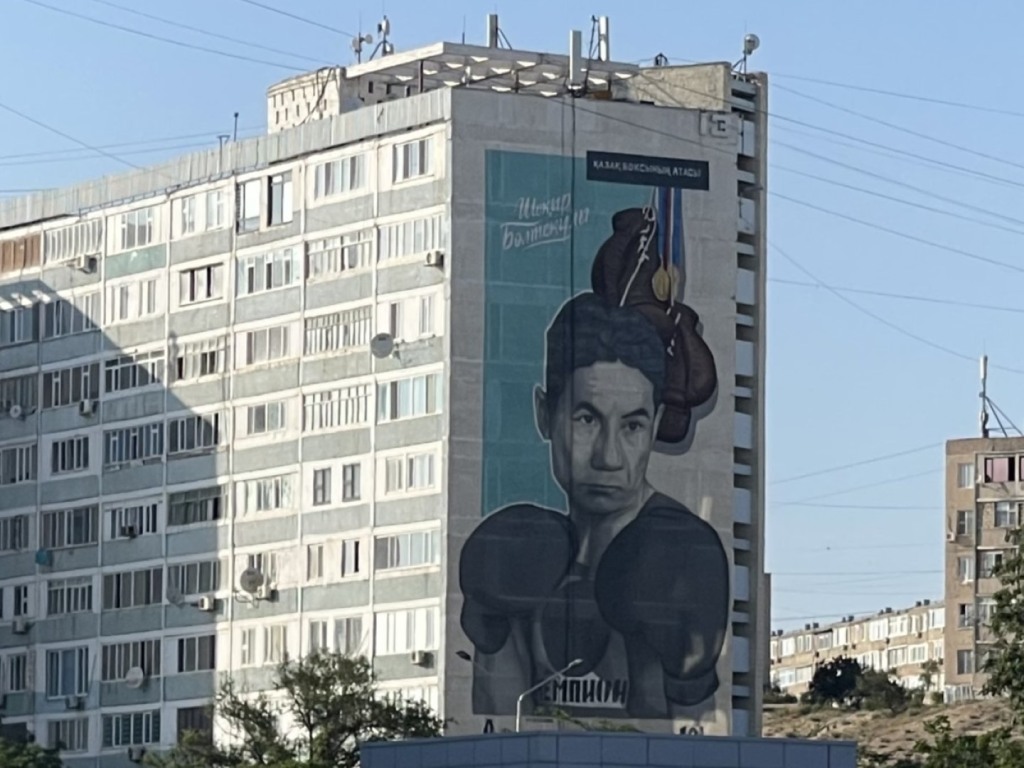
1/5 War hero Khiuaz Dospanova on the facade of the 29th house in the 8th microdistrict was the only female pilot from Kazakhstan who fought with enemies in the sky during the Second World War. 2/5 Aliya Moldagulova was a Kazakh woman sniper of the Red Army during World War II & Manshuk_Mametova on the 28th House was a machine gunner. 3/5 ditto 4/5 Kazybek bi one of the greatest Kazakh judges and mediators. 5/5 Shokyr Boltekuly was an honoured boxing coach of the Republic of Kazakhstan.
After arriving at the google map location of the third travel agent on my list and being unable to locate it I was greeted by MapaT who accompanied me up a lift to find it … but it was closed. On the bright side this was far better than the previous two suggested by google maps that didn’t exist. Returning to the ground floor, I met Djambulat, who invited me into his security shop located conveniently adjacent the lift. Within next to no time the entire security shop team were seated around a table freshly equipped with water, tea, biscuits and cakes and had instinctively assumed the role of the elusive travel agents … with their first inquiries revealing the train to Nukus was booked out and that hiring a taxi for a 14-hour trip was looking promising. Then after a myriad of phone calls miraculously a train ticket to Nukus was conjured. The full party then escorted me on a 10-minute walk to a travel agent to pick up and pay for 5 train tickets across Central Asia and then proceeded to drive me to a second travel agent to pick up a Tashkent to Delhi airline ticket! Not only that but I was looked after by MapaT and his family while in Aktau. Huge thank-you to Djambulat, MapaT and the team for your hospitality – more about that in A to B Part 4 at the end of this post.
This was the beginning of the realisation that Central Asia is the home to some of the most hospitable people on this planet. Speaking with Tim and MF who had just spent a month in Kyrgyzstan confirmed they had found the same experiences and suggested it may be due to deep nomadic roots?
Footnote: Found out later that not being able to get out of Aktau by train has baffled some of the most seasoned travellers (who’s only way out was to fly 2100km to Almaty). So double thanks to the Inteko crew.


1/6 In the lift with MapaT after confirming the travel agent upstairs was closed. 2/6 The Inteko security shop team. 3/6 Djambulat and Baisangur. 4/6 MapaT. 5/6 Picking up the plane tickets. 6/6 Inteko complimentary goody bag!
Igor Savitsky’s Improbable Museum
Nukus, Uzbekistan via Beyneu – 25th to 30th June
At the junction of the Kyzyl Kum and Kara Kum deserts just south of the now dried up end of the Aural Sea is an Art Museum that contains an unlikely combination of Karakalpak** folk art and works of the Russian and Soviet avant-garde (said to be the second largest collection of Russian modernist art in the world). Intriguingly even though the founder Ivor Savitsky received state funding to purchase the avant-garde collection he had to conceal the paintings from the Soviet regime that deemed them anti-Soviet and had banned them.
**Nukus is the capital of the Republic of Karakalpakstan which is an autonomous republic of Uzbekistan, hence the two flags in slide 20/20 below.


1/20 Igor Vitalievich Savitskiy (1915-1984). 2-17/20 Some of Savitsky’s collection, a number of works featuring the now almost non-existent Aural Sea. 18/20 Painting by Igor Savitsky – Street in Old Khiva – 1980. 19/20 A staff to client ratio of about 20:1. 20/20 Igor Savitsky’s museum with Karakalpak and Uzbekistan flags in the background.
For the art buffs, I have included a video presentation by Zukhra Kasimova about her paper entitled ‘THE IMPROBABLE MUSEUM: Igor Savitsky’s Art Museum in Nukus as an Artifact of Post war Soviet Reality‘. It gives a fascinating background into how this collection of banned soviet art was assembled by Igor Savitsky in ‘Soviet Polynesia’ and the secrecy that continues to this day surrounding the museum’s catalogue.
Farewell Silver
Bukhara – 1st to 7th July
While in Bukhara ‘Silver’ developed a liking to the place, possibly fuelled by a fear of Indian traffic, and no amount of persuasion could change that stubborn bikes mind … perhaps a bit of Central Asian oil in the bearings? Fortunately, my wonderful Airbnb hosts, Muftuna and Shamshod took a shine to Silver and will be looking after him.
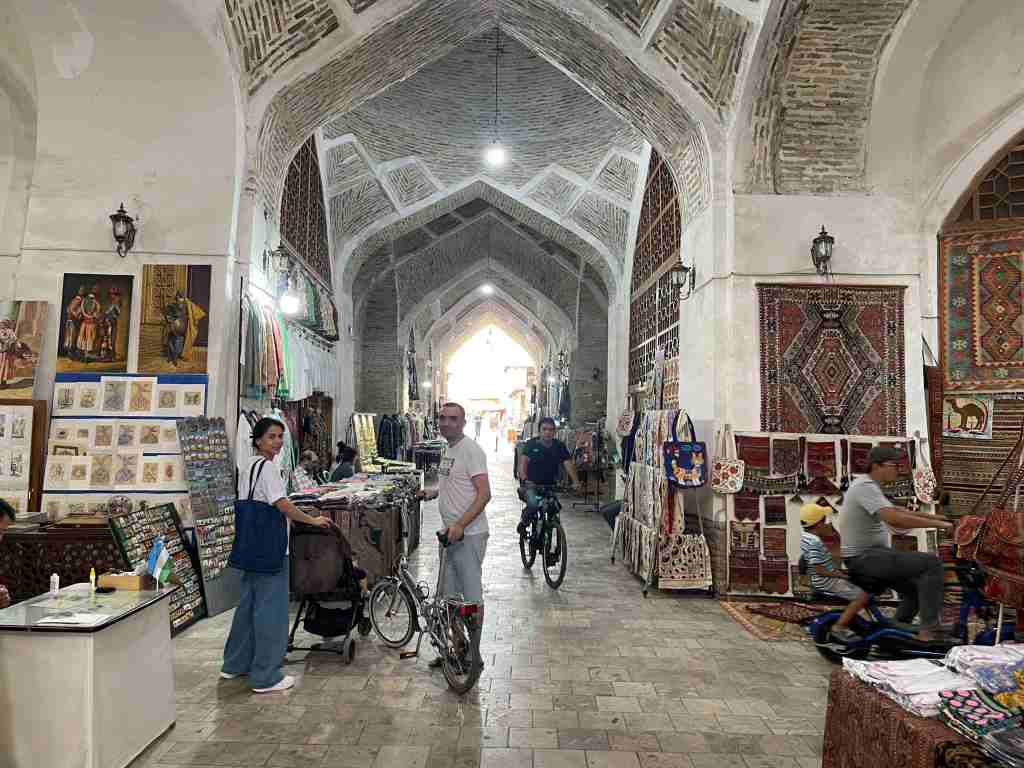
Amir Timur
Samarkand – 8th to 19th July
Working in an architectural office in Hyderabad, India in my early 20’s ignited an interest in the architecture of the Qutub Shahi and Mughal Dynasties who ruled there for over 200 years. While the founders of the Qutub Shai Dynasty (1518-1687) originated from Persia, the Mughals (1687-1857) who were responsible for some of the most significant architecture in India and Pakistan, had stemmed from Samarkand.
The Timurid Empire (1370-1507) at its height in the early 15th century, took in modern-day Iran, Iraq, Afghanistan, much of Central Asia, the South Caucasus, as well as parts of contemporary Pakistan, North India and Turkey. The empire was established in Samarkand by Timur between 1370 and his death in 1405. Timur was a descendant of Genghis Kahn and an undefeated commander, regarded widely as one of the greatest military leaders and tacticians in history, as well as a great patron of art and architecture.
Registan Square was the heart of the ancient city of Samarkand and the Timurid Empire. Built after Timur’s death Registan Square consists of three madrasah which by the 15th century were the largest scientific educational institution in Central Asia, teaching theology, mathematics, astronomy and philosophy. Timurid Architecture while being influenced by Persia evolved classical solutions in these madrasahs.
By 1500 the Timurids had lost most of Iran, and the final blow to the Empire was when the Uzbeks conquered Samarkand in 1505. However, in 1526 from a remaining outpost located in Kabul, Babur, a descendant of Timur through his father established the Mughal Empire. By the 17th century, the Mughal Empire ruled most of India but eventually declined during the following century. The Timurid dynasty finally came to an end when the remaining nominal rule of the Mughals was abolished by the British Empire following the 1857 rebellion … more about the Mughals when I get to Delhi.
China
Tashkent – 20th to 22nd July
While in Tbilisi, Georgia I applies for a visa to travel from the boarder of Kyrgyzstan through China via Kashgar to Pakistan. Booked and paid for a 6-day tour with Chinese Travel agent ‘Silk Road Travel’* and then proceeded to stand on the footpath with 50 other people in Tbilisi outside the Chinese Embassy to lodge a visa application. It was a system that perplexed even the local Georgians and included a hidden school exercise book tucked behind a down pipe in a secret location! Long story short, after 4 hours of standing (no seats) I was asked to enter the building where I was promptly told I was in the wrong Embassy would need to apply in Australia. “If this Embassy were to process applications from third countries then that would open the floodgates to everyone … there is no way this embassy can deal with that many applications … given we are only open 9 hours a week” … silly me why didn’t I think of that! Lee from Silk Road Travel rang both the Tbilisi and Tashkent Embassies and got the same line. Fortunately, that gave me the excuse I needed to fly Uzbekistan Airways from Tashkent to Delhi and see the coolest in-flight safety video!
*Highly recommended
Mughal country
Delhi, India – 23rd to 31st July
While wandering the streets of Old Delhi I visited Jama Masjid, one of the largest mosques in India, built by the Mughal emperor Shah Jahan between 1644 and 1656. Under his emperorship, the Mughals reached the peak of their architectural achievements with buildings such as The Taj Mahal, the Red Fort and Jama Masjid.

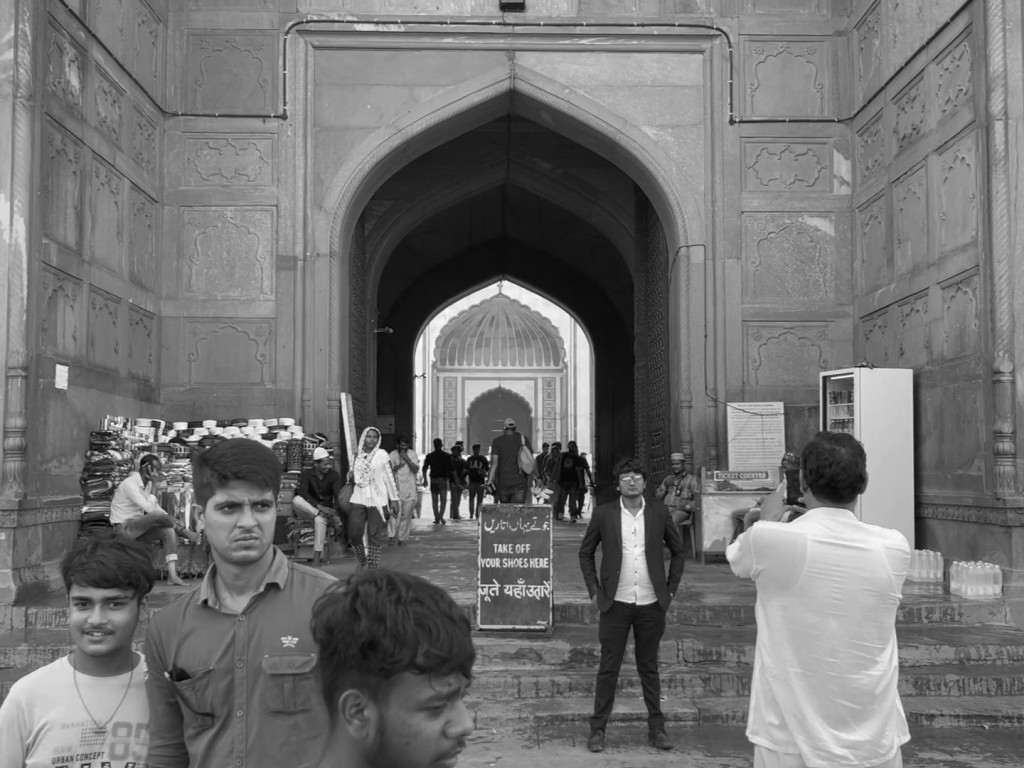
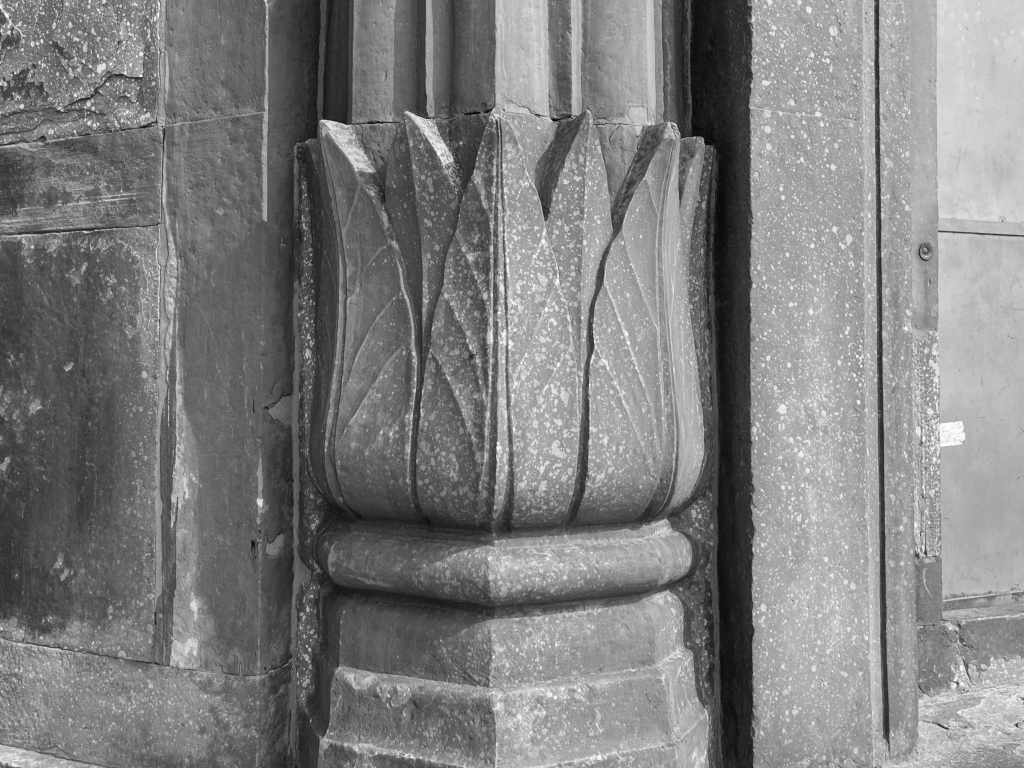


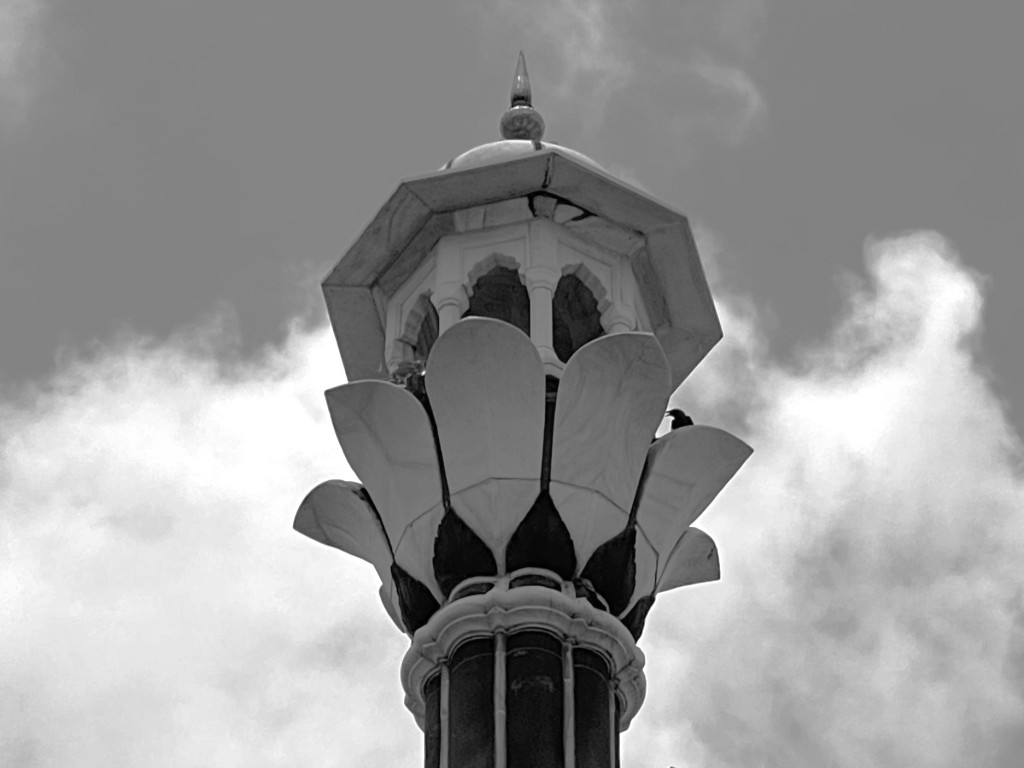


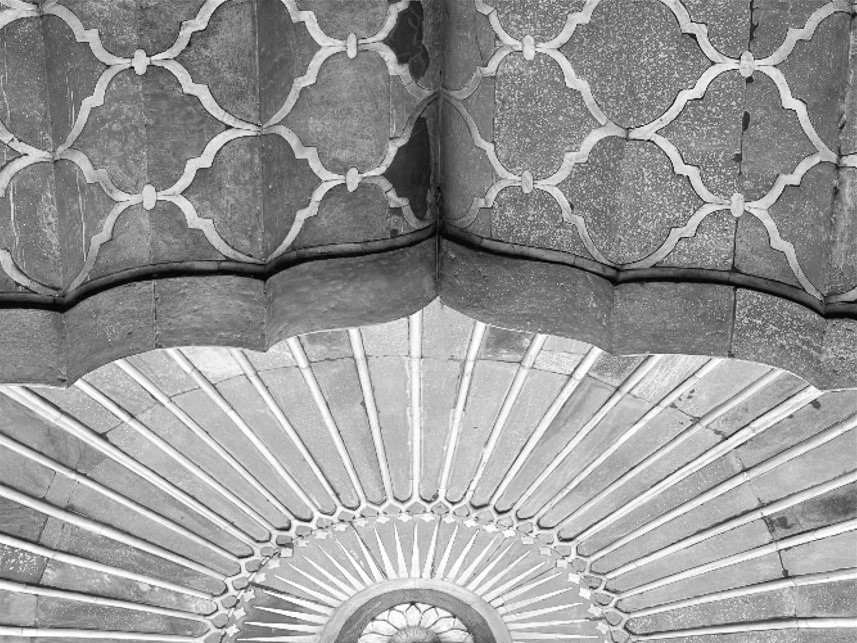


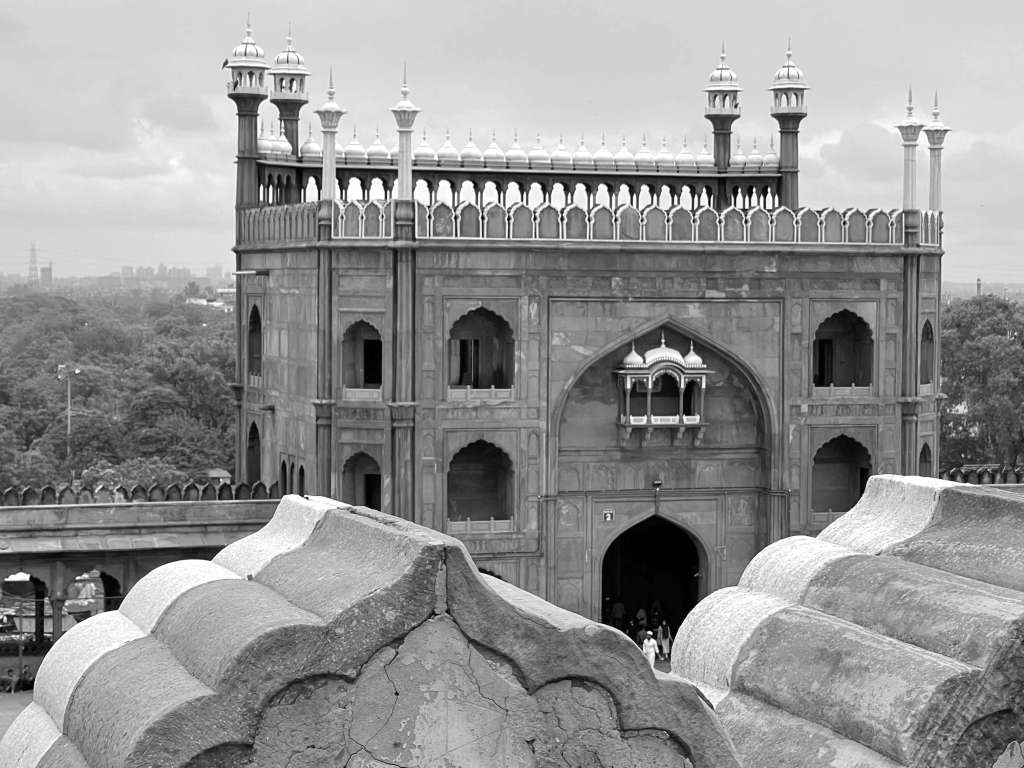
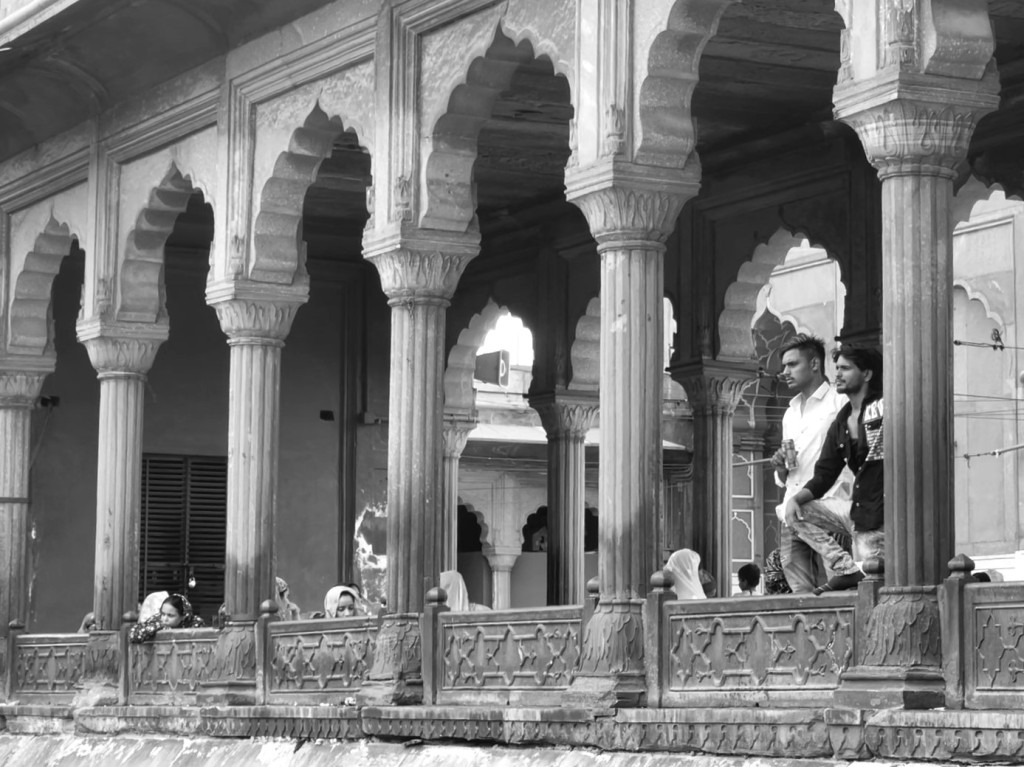

1/15 to 15/15 a visit to Jama Masjid.
The origins of the Biryani
While in Central Asia I was on the hunt for the origins of the Hyderabadi Biryani. After trying Plov (Pilaf) in Kazakhstan and Uzbekistan, I am a firm believer in the legend that Biryani was brought to India from Samarkand via Kabul by Tamerlane, in the year 1398. The cultural mesh of Persia, central Asia and India gave birth to an offshoot of plov, biryani; it seems the Mughal kitchens added Indian spices to the subtle plov which gave birth to the fiery biryani.
I have added a Hyderabad mutton (goat) Biryani recipe below for your next dinner party or street party. I had originally intended to include a 500kg recipe but have substituted it for a 1000kg one, so you don’t get caught short. Content Warning to vegetarians.
Brutalism, Partition & Chance
Chandigarh – 23rd July to 11th September
Q. – Why the hell is some of the most significant modernist/brutalist architecture in the world located in Chandigarh?
A. – Partition and a plane crash.
PARTITION – In 1946, Britain cut and run from India as it was costing too much to administer, by announcing it would grant independence. Two days after independence the British released a map dividing India on religious grounds into Hindu India and Muslim Pakistan which resulted in 15 million people being relocating and up to 1 million perishing from violence or disease in refugee camps! Short TED background video about Partition here.
The boarder of India and West Pakistan ran through the Punjab, with the capital Lahore ending up in Pakistan. In 1950 the first Prime Minister, Jawaharlal Nehru announced a new capital would be built in Indian Punjab which became Chandigarh.
THE PLANE CRASH – in 1950 Nehru commissioned architects Albert Mayer and polish architect Matthew Nowicki to prepare the master plan for the new city. A fan shape plan based on Radburn was well evolved when Nowicki was tragically killed in an air crash, which led to Mayer deciding to discontinue the commission. In 1951 Le Corbusier who was one of the pioneers of modern architecture was commissioned to take over the master planning of Chandigarh and design the buildings in the Capitol Complex area.
Chandigarh was envisaged to be politically and administratively symbolic of the aspirations of a newly independent nation reflected in a planned capital city imbued with eminence
and personality of its Starchitect, Le Corbusier. From viewing Nowicki’s masterplan and building sketches in the Chandigarh Architecture Museum in Sector 10, my thoughts are his designs would have reflected the nature of India in pattern and form more than Le Corbusier’s brutalist solution.


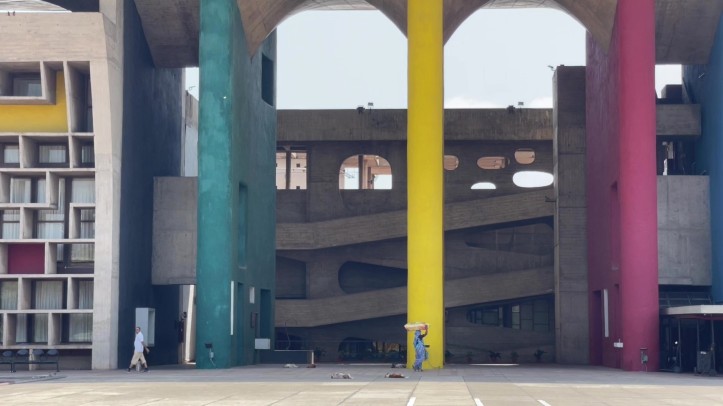


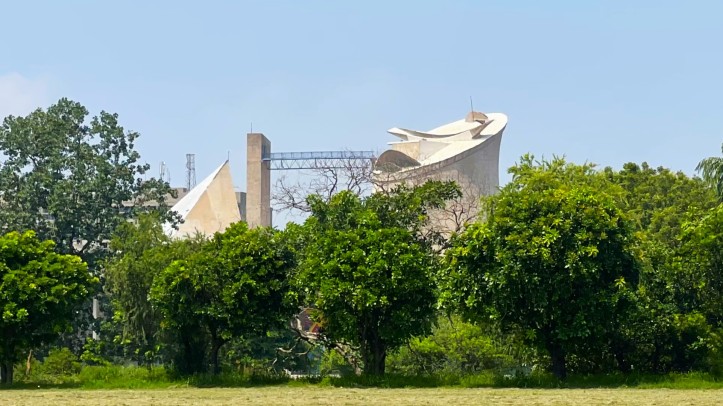

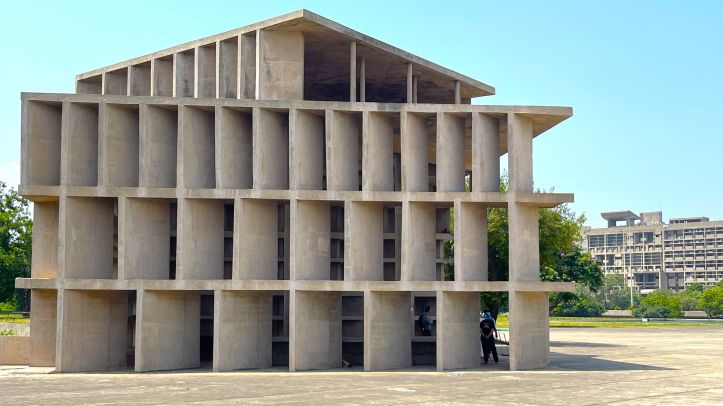


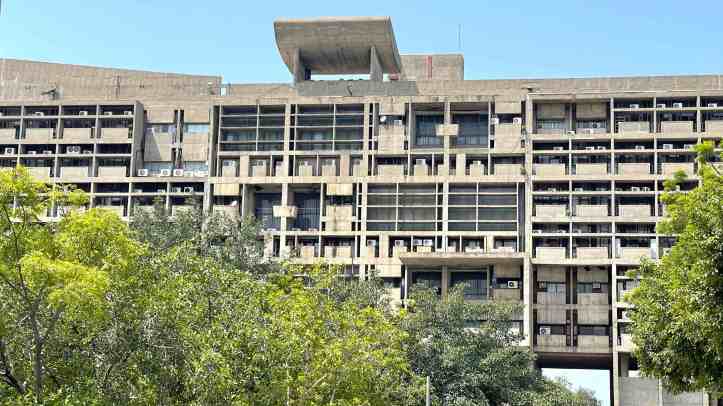
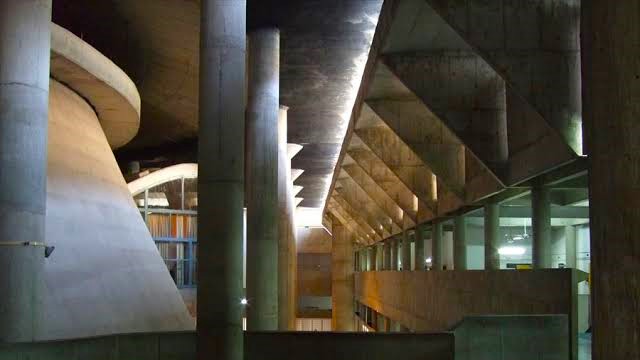
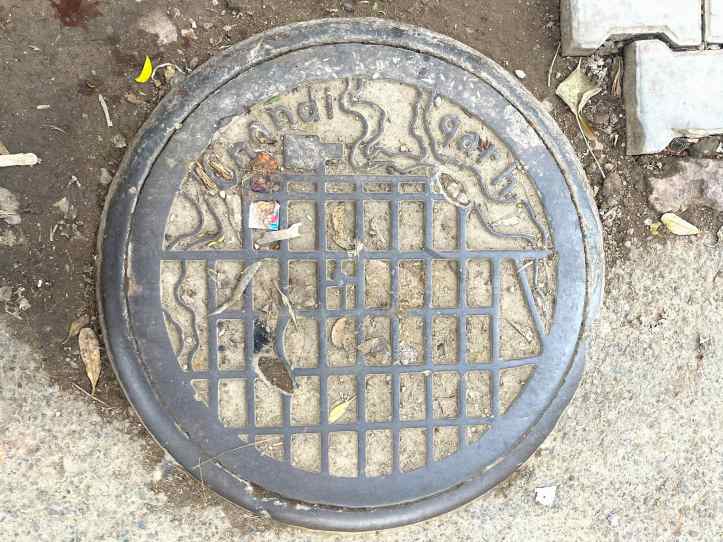


1/19 Leading independence campaigners Jawaharlal Nehru and Mahatma Gandhi wanted an India that embraced all faiths. 2/19 Sikh refugees in a relief camp in Amritsar, in 1947-1948. 3/19 Le Corbusier’s plan of the Capitol Complex. 4-5/19 The High Court – this and the following buildings are part of the Capital Complex which were designed by Le Corbusier. 6/19 The open hand monument, 50 tonne hand that swivels in the wind. 7/19 The Assembly. 8/19 Bollywood movie star Michael O’Donovan walking past The Martyrs Memorial. 9-10/19 The Tower of Shadows. 11-15/19 The Assembly. 16/19 The Assembly interior. 17/19 Chandigarh manhole covers designed by La Corbusier. Auction house Christies sold one at auction for $21,600 US. There are 2000 installed in the city. 18/19 Le Corbusier’s Masterplan for Chandigarh. 19/19 Chandigarh Architects Museum designed by S.D. Sharma.
A to B – Part 4
The following clip is Part 4 of the trip from Falkirk to Cairns.
Heading East
Phir milenge (see you later), time to pack the bags and head to Lahore to deliver some motorcycle helmets and prayer flags … will let you know how it goes.
Cheers 87)
 Sphere Observations
Hi Mark, Aga & Yan here. We met on the Gibb sometime ago 🙂 Glad to see you’re doing well and keep on travelling and observing the world! All the best and cheers from Japan!
LikeLike
Hi Aga & Yan
Yes, I remember meeting on that very hot day.
Greetings from Jhelum Pakistan … traveling north on a Suzuki 150!
Great to see you two are experiencing Japan … amazing country😊
LikeLike